

Blessed are the peacemakers,
for they will be called children of God.
Matthew 5:9
In The Dharma Bums, Jack Kerouac envisions “a great rucksack revolution of thousands or even millions of young Americans […] going up to mountains to pray […] all of them Zen lunatics who go about writing poems that happen to appear in their heads for no reason and also by being kind and also by strange unexpected acts keep giving visions of eternal freedom to everybody and to all living creatures.”
Kerouac’s dharma bums are mountain-wandering, poetry-writing, and wine-drinking Zen eccentrics who are at home both everywhere and nowhere. This is why I am drawn to the Korean poet Kim Sakkat, also known as the Rainhat Poet, and am thankful to an Irish Catholic priest, Kevin O’Rourke, for translating and editing Selected Poems of Kim Sakkat.
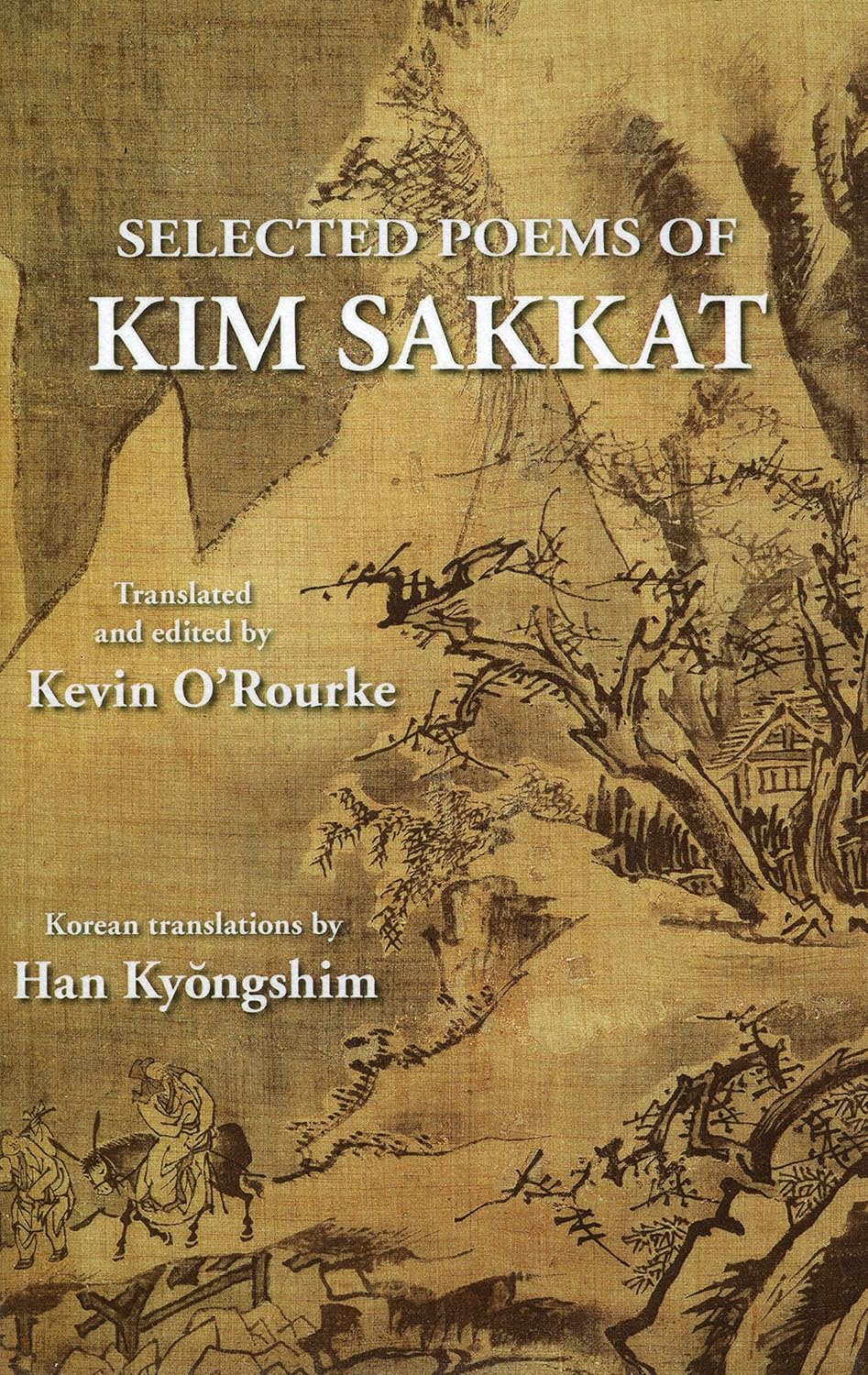
O’Rourke was born in Cavan Town in 1939 and began wandering around South Korea in 1964 as a newly ordained priest of the Missionary Society of St. Columban. Immersing himself in Korean language and culture, he became the first foreigner to receive a doctorate in Korean literature from a Korean university in 1982, and was a professor of literature at Kyung Hee University from 1977 to 2005. He translated over 2,000 Korean literary works into English before his passing on October 23, 2020.
One of the poets O’Rourke translated was Kim Byeongyeon (1807-1863), who was born into the ruling class, known as yangban, and went by many names: Rainhat Kim, Kim Rip, Kim Taerip, and Kim Sarip. But he is popularly known as Kim Sakkat, the Rainhat Poet, a “people’s poet.”
Much of what we know about Kim Sakkat is conjecture. But we do know that by the age of twenty he was smart and ambitious and had read all the classics. But a scandal involving his grandfather and alcohol meant that he could never pass the national civil service exam, known as Gwageo, and become a government official.
In his introduction to the volume, O’Rourke explains that during the latter Chosun period, a new category of yangban emerged, the dispossessed yangban, “men who for family or political reasons, or because of corruption in government, had no hope of passing the Gwageo exam and entering public office […] The result was a huge class of dispossessed yangban who were reduced to the status of beggars.”
When Kim Sakkat found himself in the class of beat-down yangban, he put on a wide-brimmed straw hat to protect his head from the elements and went on the road as an itinerant poet. His “travels took him to every corner of the country,” O’Rourke writes. “The Diamond Mountains [Mt. Kumgang] was a favorite haunt.”
In “The Diamond Mountains,” Sakkat writes:
Red pines, white pines; I wind my way between the rocks,
the world full of the wonder of mountains and waters.
These two lines encourage us to slow down, take a deep breath, and be mindful as we wind and wander, to open our bodies and minds to the wonders of the world, to expand the boundaries of the self to include trees and rocks, mountains and waters.
In The Dharma Bums, Kerouac writes, “The closer you get to real matter, rock air fire and wood, boy, the more spiritual the world is.” Buddhism, like Romanticism, is an art of noticing, of moving closer to the wonders of the living planet in an awareness of interdependent co-arising.
Or as O’Rourke puts it, this “magically clever poem is full of Zen.”
When I see the word “pines” in this poem, I inhale pine trees. Perhaps dharma bums are joyful and generous wanderers because pine trees are high emitters of phytoncides, compounds which lower stress hormones, reduce blood pressure, boost the immune system, and improve sleep.
During this time of war and genocide, climate breakdown and technofeudalism, AI and water bankruptcy, a time when the leader of the collapsing US empire threatens that “a whole civilization will die tonight, never to be brought back again,” phytoncides are an essential nutrient.
We need to constantly remind ourselves that the world is still full of wonder, and that trees and rocks and mountains and waters are worth fighting for. We need to fight for a world of wonder, and not let it be destroyed by far right, imperialist death cults.
In the 1950s and early 1960s, Zen eccentrics like Jack Kerouac, Allen Ginsberg, and Gary Snyder introduced Buddhism to young Americans who were being sacrificed to the Cold War “Nightmare of Moloch,” as Ginsberg named it in “Howl,” and were hungry for other ways of thinking and being in the world. And in doing so, they brought East and West a little closer together. They were peacemakers.
Through his generous work as a translator, O’Rourke helped trigger a Korean Poetry Wave that brought Korea to the world, and the world to Korea. He was a peacemaker. O’Rourke was beat, but more in the sense offered by the mongrel Catholic Kerouac:
Beat doesn’t mean tired, or bushed, so much as it means beato, the Italian for beatific: to be in a state of beatitude, like Saint Francis, trying to love all life, trying to be utterly sincere, practicing endurance, kindness, cultivating joy of heart.
Kevin O’Rourke’s time in Korea as a scholar, poet, and translator, which he documents in his memoir My Korea: 40 Years Without a Horsehair Hat, is filled with beatitude.
The Korean dharma bum Kim Sakkat drank, flirted, satirized, cursed, laughed, and wrote his way around Mt. Kumgang, the Diamond Mountains, which is part of the Taebaek Mountain Range that stretches across North and South Korea, ignoring political ideology and geopolitical conflict as its jagged, craggy peaks traverse and tower over the Demilitarized Zone (DMZ), one of the most heavily militarized places on the planet.
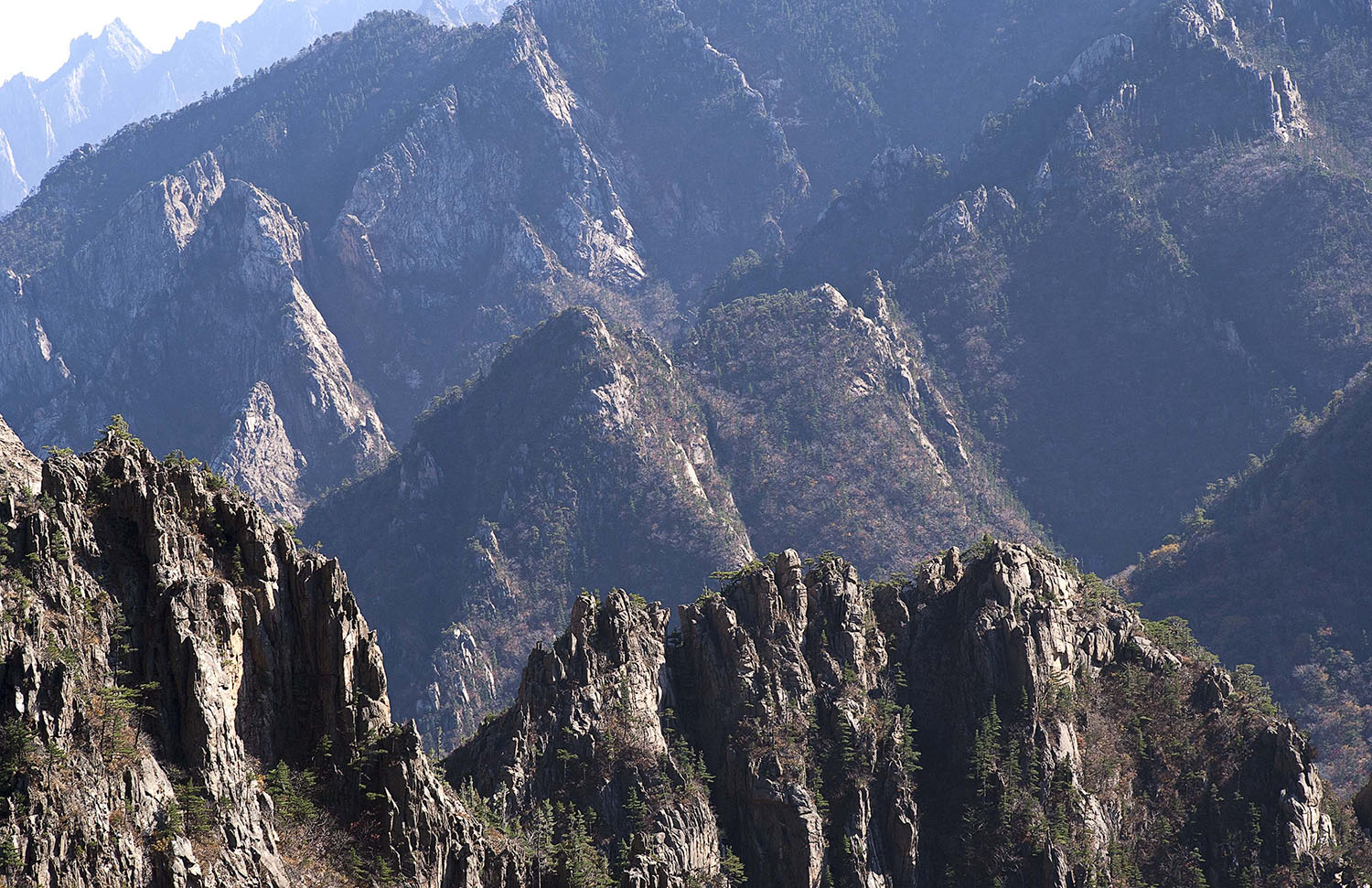
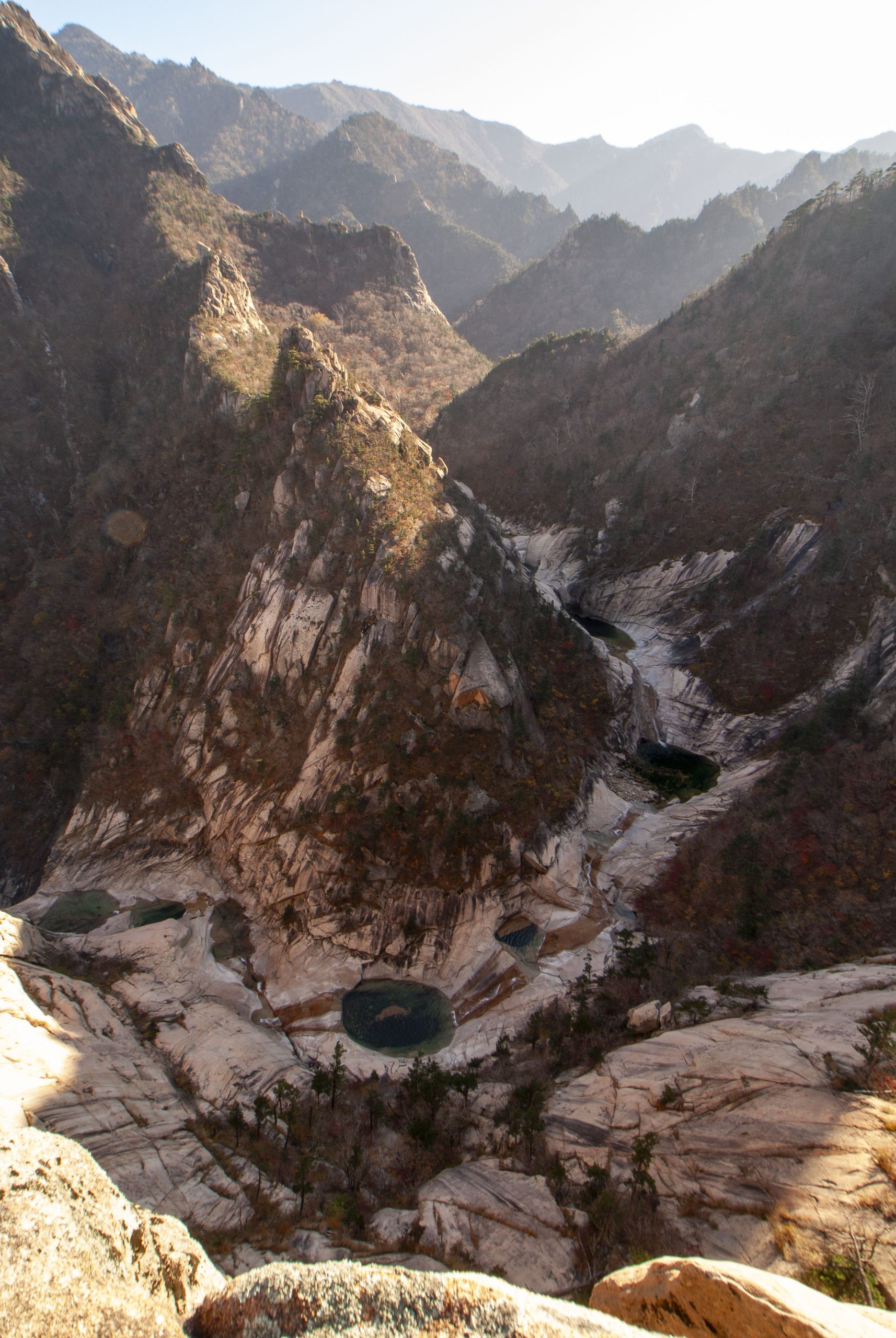
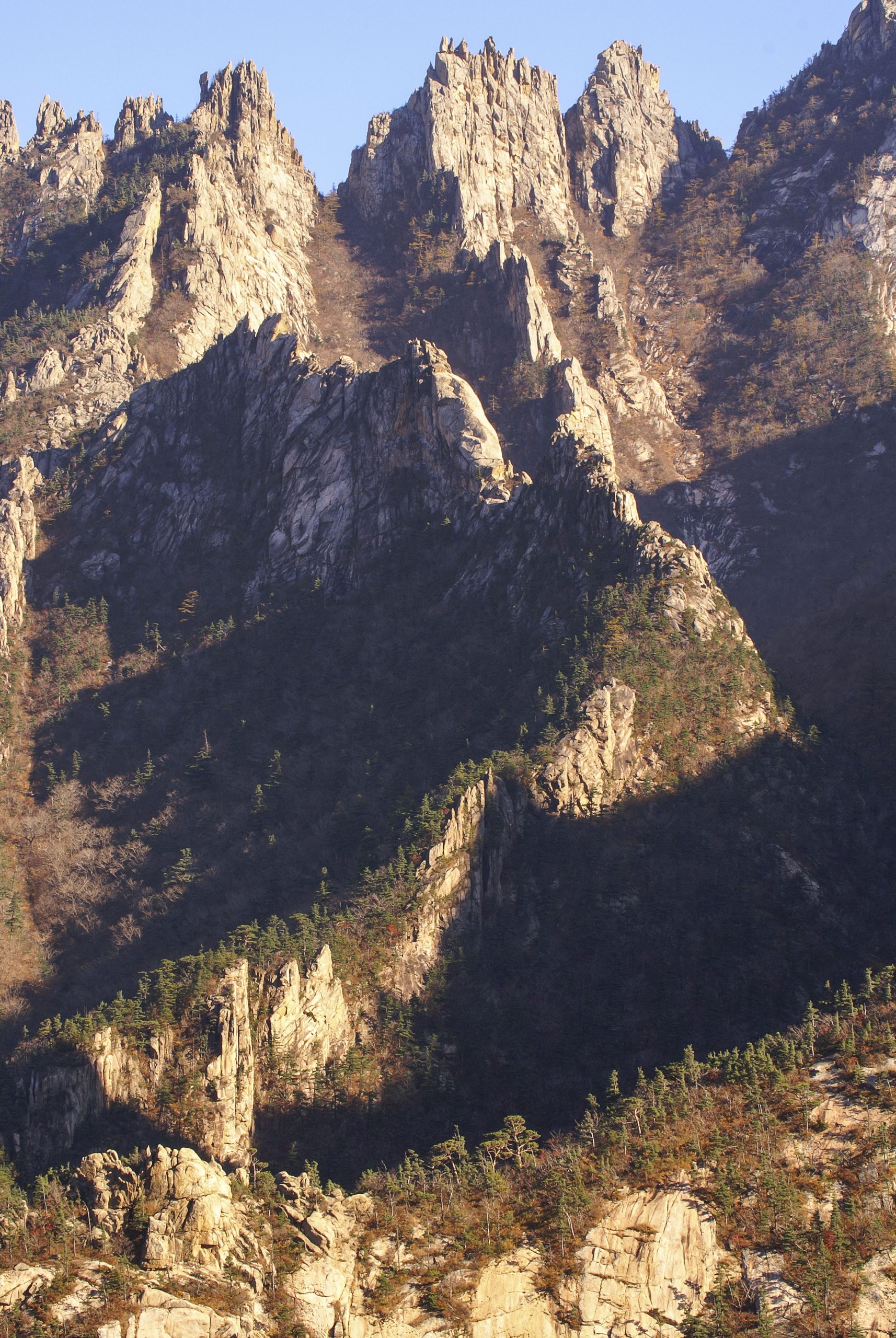
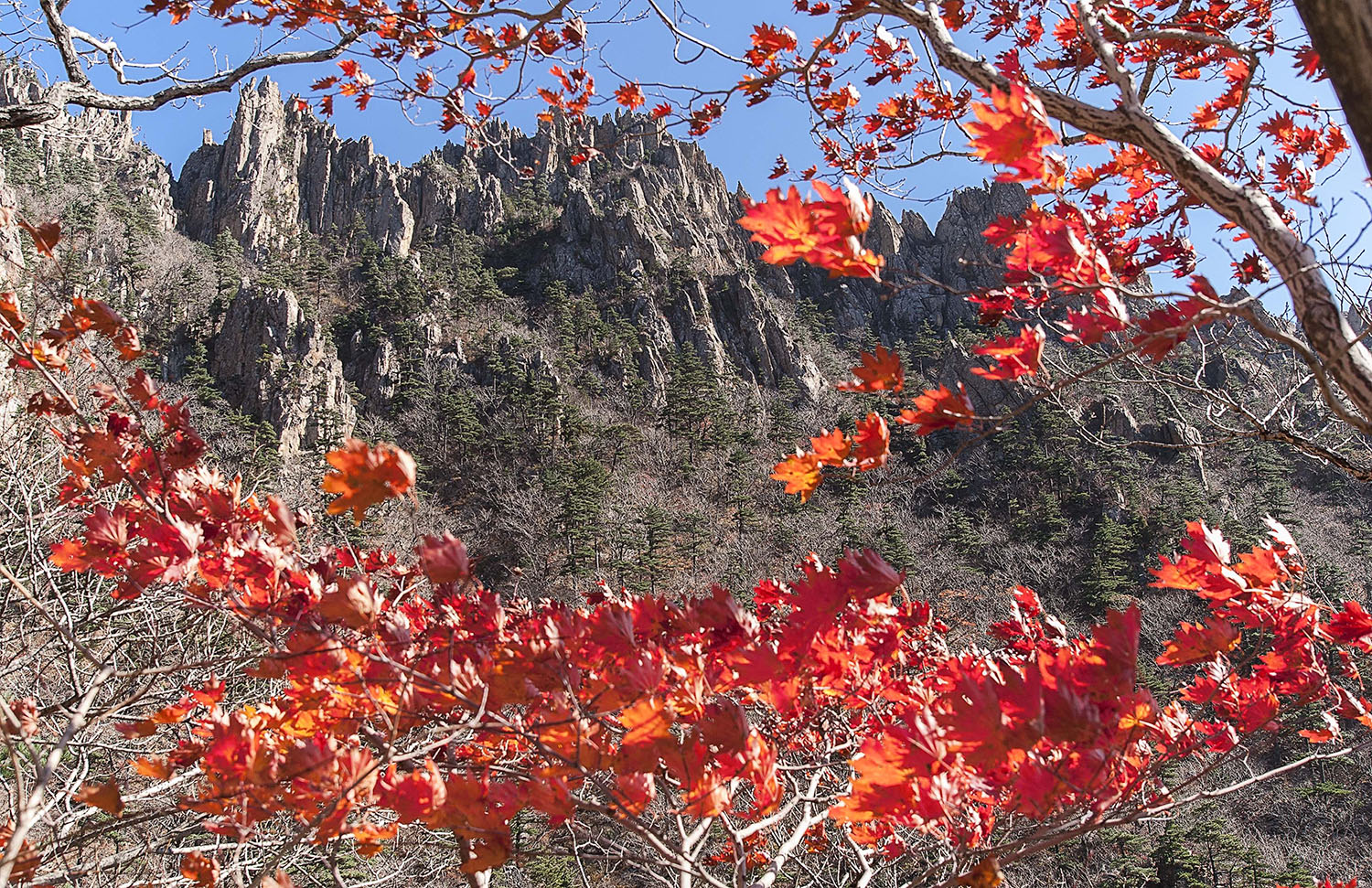
These four photos of the Diamond Mountains were taken by Roger Shepherd and are used with his permission. He runs https://solo.to/hikekorea.
In “Summer Clouds,” Sakkat gushes over the wonder of the world with an immediacy that often appears in Kerouac’s prose and poetry:
One peak, two peaks, three, four peaks;
five peaks, six peaks, seven, eight peaks.
Ten million peaks restructured in a moment;
The broad expanse of the sky is all peaks.
I look forward to the day when everyone can wander and wonder freely around the Diamond Mountains with Kim Sakkat, and Kevin O’Rourke’s translations, as our dharma guides.


